

Types of Bed Bunk Wood
Wooden bunk beds use a traditional visual that is a great fit for numerous bedroom styles. They are also strong and long-lasting, making them an excellent choice for AirBNB or VRBO rental residential or commercial properties.
Ideally the bunk bed slats would be made from tough birch or maple so they withstand bending and will not warp. Soft pine is okay but may be vulnerable to drooping in time.
Hardwoods
Understood for their strength and longevity, hardwoods are the most typical kind of wood utilized in bunk beds. They are likewise the most costly, though they offer superior quality that will last a very long time. In addition to being strong and durable, they are likewise aesthetically pleasing and can be improved with a range of discolorations and finishes.
Depending upon the species of tree, woods can vary in hardness, but generally they are harder and more resistant to rot than softwoods. In addition, their cellular structure is more complicated, which results in them having a greater density. However, this is not a strict guideline, as balsa wood-- which is among the softest kinds of wood-- is categorized as a wood due to its botanical classification.
When choosing bed bunk wood for your project, it is crucial to think about the kind of work you will be doing as well as the intended application. Softwoods are normally more flexible than hardwoods, that makes them an excellent option for furniture and other light-duty applications. For more long lasting and heavy-duty applications, you will want to pick a hardwood such as oak, maple or cherry.
While these types of woods are understood for their toughness, they are harder to deal with than other types of lumber. In addition, they are more vulnerable to humidity, which can cause warping and other problems. For this reason, it is best to pick a hardwood that has been appropriately dealt with or sealed.
Wooden bunk beds are generally crafted from woods such as pine, maple or oak. These kinds of wood are often thought about to be the most appealing, as they can be ended up in a variety of ways. They are likewise very resilient and can stand up to the weight of the bed and the tension of usage. However, wood can be more hard to put together than other kinds of bunk beds and may require expert installation.
For a more lightweight alternative, you could consider using plywood. This material is economical, however it is not as strong as solid wood. It is also not as resilient as metal, so it is not a great choice for a bunk bed.
Plywood
Plywood is a kind of crafted wood product that combines real-wood veneers with other products like medium density fiber board (MDF), or oriented hair board (OSB). It's one of the most common structure products used in modern construction and is likewise called a multi-ply composite material. It's offered in a wide variety of densities and sizes that enable it to be used within many various types of building jobs.
Plywood can be made from various species of trees, consisting of pine or birch. The type of tree utilized will frequently depend on the specific purpose and level of toughness preferred for the plywood. For example, a plywood that is used for structural purposes will typically be sourced from hardwoods such as oak or maple. These kinds of woods are considered to be more powerful and more long lasting than softwoods such as pine or fir.
Due to the fact that the structure of a bunk bed is based upon toughness and safety, it's essential to guarantee that the wood utilized to construct the frame is able to stand up to the weight of a person laying on the top bunk. Plywood is a perfect choice for this since it can stand up to a good deal of pressure without flexing or deforming under the pressure.
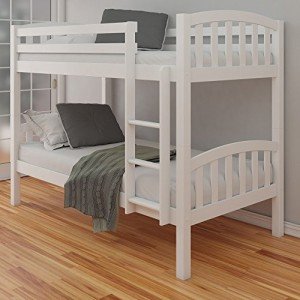
Another advantage of using plywood is that it can be built with a variety of different surfaces and colors. This makes it easy to match the bunk bed with other furnishings pieces in a space, creating a cohesive and stunning look. Additionally, making use of plywood is more ecologically friendly than using solid-wood products. This is due to the fact that fewer resources are required to make plywood, which lowers the ecological impact.
In addition to being strong and attractive, plywood is reasonably affordable and readily available. This makes it a cost effective alternative for constructing a bunk bed, especially when compared to a wooden bunk bed made from solid-wood. It's essential to keep in mind, nevertheless, that solid-wood beds are more most likely to experience splintering and cracking over time than those built from plywood.
For this reason, we suggest selecting plywood for bunk beds that are planned to be used by children. Having a solid wood bunk bed can be more costly than a plywood bunk bed, however it's worth the additional expenditure for a tough and long-lasting bed that will last years to come.
wooden bunk beds with drawers of being considered a soft wood, poplar is extremely versatile and durable. It's used to make a variety of products, including furnishings, cabinets, and wooden toys. It's likewise a popular choice for making plywood.
Poplar is a fast-growing tree that produces long, straight boards that are without knots. It's also a "clear" wood, meaning that it takes spots effectively. Due to the fact that of this, it's a good option for windows and door trim. It's also a popular choice among do-it-yourselfers since it's easy to work with and economical. It likewise takes screws and nails quite well.
Another thing that makes poplar an excellent option for bunk beds is the fact that it's really strong. It can withstand a great deal of weight without any issues. That's since it has an excellent strength-to-weight ratio. It's likewise a dense wood, which contributes to its resilience.
In addition to its structural properties, poplar is likewise extremely lightweight. That makes it perfect for bunk bed frames and other types of furniture. It's likewise really resistant to water and rot. It's essential to note, nevertheless, that poplar is not as strong as some other hardwoods, like hickory or red oak.
Bunk beds can be made with a variety of materials, consisting of metal frames and solid platforms. They can likewise be built with slatted structures. No matter the kind of frame you choose, it's essential to use a bunk board to support your mattress. Without one, your mattress could sag too soon.
A bunkie board is a 1 to 3-inch flat barrier that fits between your mattress and the surface it rests on. Bunkie boards are a popular supplement for standard beds that were designed with innerspring mattresses in mind and might not be suitable with foam or hybrid mattresses. They're also a good alternative if your slats are too far apart to support your mattress. A bunkie board can help prevent sagging and keep your mattress looking more recent for longer. Bunkie boards are readily available for purchase at the majority of significant merchants, consisting of Builder Surplus areas. They're readily available in a wide variety of designs and colors to match any bedroom.
Other Woods
The type of wood used for bed bunks can impact how long they last. Solid woods and high-quality metal bunk beds are generally considered the finest choices for sturdiness, as they can endure heavy usage without contorting or breaking. Composite wood materials, such as medium-density fiber board (MDF) and particleboard, are less long lasting and may not stand up to the rigors of regular or heavy usage. They're better matched for shorter time periods and for settings that will not see much usage.
If you're looking for a low-cost however durable alternative, think about utilizing Douglas Fir lumber for your bunk beds. This species abounds on the United States west coast and provides great workability, strength, glue/varnish/paintability, and rot resistance. It's likewise eco-friendly, and you can discover it at an affordable price.
In addition to the material of your bunk bed, the building and joinery approach are essential factors in how well it will hold up gradually. Look for strong connections, such as mortise and tenon or dowel joints in wood beds and bonded connections in metal bunks. Badly constructed bunk beds can end up being unsteady when pressed to their weight limitations, and may be susceptible to rust or other damage over time.
Another element to consider when selecting a bunk bed is its size and how easily it can be transformed into different beds or couches. Some metal bunk beds can be adjusted to form private couches, while wooden bunk beds are often readily available in different sizes and styles that can be separated into single beds or twin extra-long-length beds.